
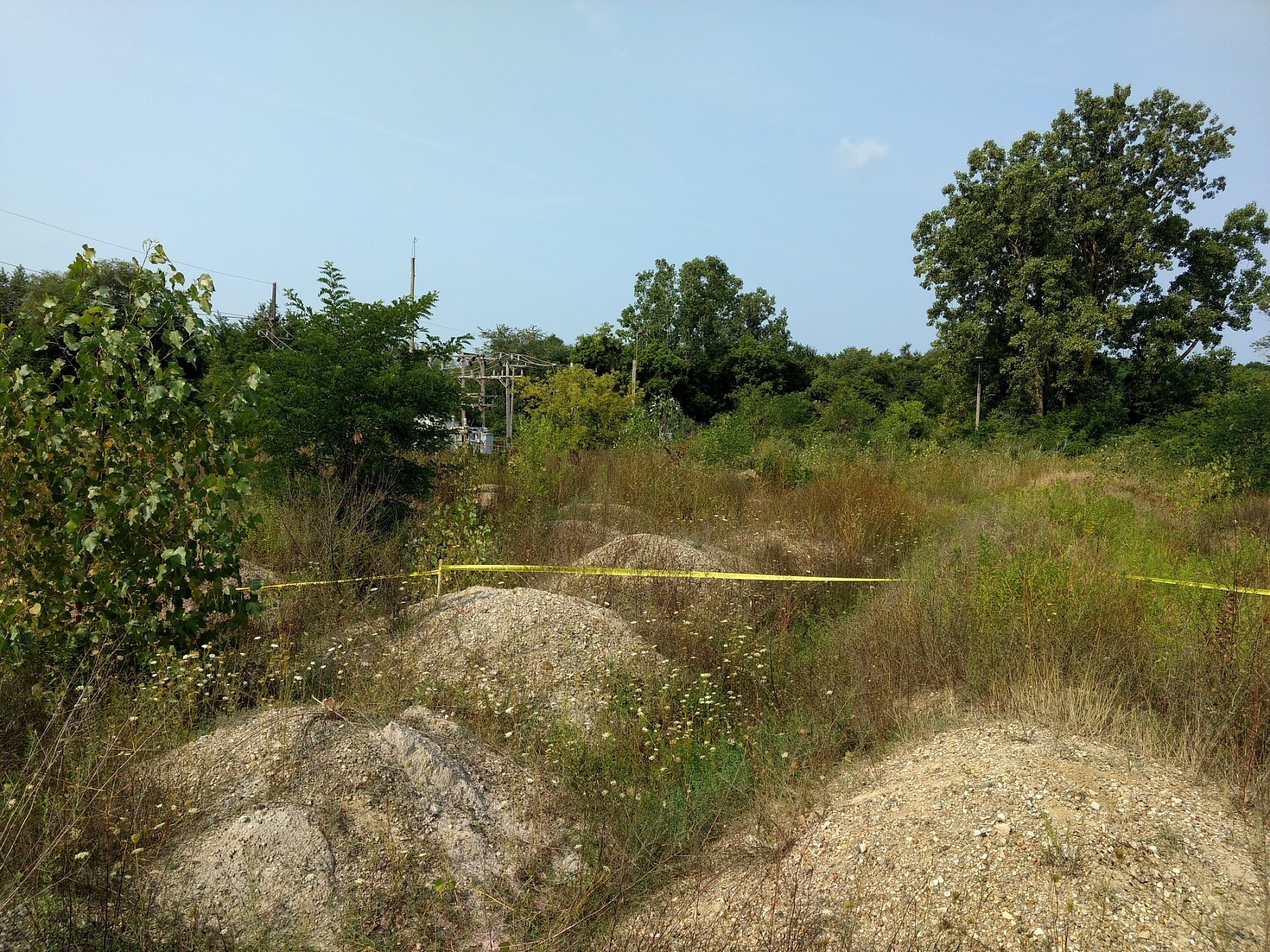
BLDI was retained by developers to conduct the necessary environmental due diligence for the purchase of a large parcel in Hamburg Township, Michigan. Previous uses of the property included a large manufacturing facility. The large manufacturing facility had been demolished, and the property had sat vacant for many years. In that time, soil mounds of an unknown origin were placed on the majority of the central-eastern portion of the Property. Known contamination was present on the property from previous work. Because of this, to aid in funding the development, BLDI worked with the local government and the state to secure grant and loan funds from EGLE under its Brownfield Redevelopment Program.
Incremental sampling (IS) of the non-native soil mounds at the Property was conducted in accordance with the Interstate Technology Regulatory Council (ITRC) Incremental Sampling Methodology guidelines (February 2012) and the EGLE Incremental Sampling Methodology and Applications document (January 2018). The purpose of the completed incremental sampling (IS) was to obtain an unbiased, statistically valid, and representative sample of the entire environmental media while providing reproducible results.
Because of the state funding used, BLDI worked with EGLE to have a work plan approved and subsequently executed. The Property was divided into three decision units (DUs). A total of 50 equal-volume increments were collected following a random systematic method from each DU to obtain an unbiased, statistically valid estimate of the mean value of the pre-determined analytes of concern within the DUs. Two replicates (collected from different soil piles) were collected from one of the DUs, as approved by EGLE staff, for a total of 150 increments (and subsequently three samples) taken from that particular DU.
The five incremental soil samples collected from the Property were submitted for laboratory analysis of volatile organic compounds (VOCs), polynuclear aromatic hydrocarbons (PNAs), and Michigan 10 Metals (arsenic, barium, cadmium, chromium (total), copper, lead, mercury, selenium, silver, and zinc).
The IS results enabled the developers to characterize the soils and ensure proper onsite management for their development. Other phases of this project are ongoing, including the removal of an abandoned underground storage tank.